
We modeled the next 119 tournaments, from 2030 to 2502. Here is what the data says about where soccer goes next, and about the world it might be played in.
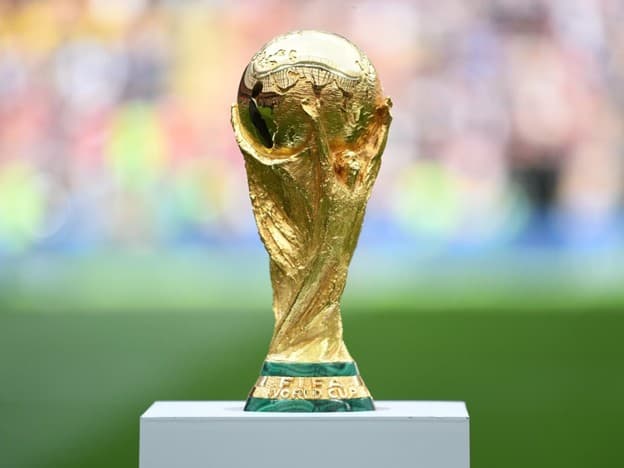
We wanted to know a simple thing. If you take the forces that genuinely decide where a World Cup goes, and let them run for five centuries, where does the tournament end up?
So we built a model. Every edition from 2030 to 2502, each with a host and a champion, each reasoned from the same set of inputs. Population trajectories. Climate projections. Economic weight and sovereign wealth. The politics of who is talking to whom. Then we let it run for 476 years, 119 tournaments, and read the results.
Two things are worth saying about the model before any of the findings, because they shape everything that follows.
The first is the mechanic. FIFA operates a rotation policy: no confederation may host if it staged either of the two previous tournaments. That single rule governs the whole timeline. It is the reason the map keeps moving, and it does more work here than any other input.
The second is the disposition. This is an optimistic model, and deliberately so. It assumes humanity muddles through: that the climate challenge is met with adaptation rather than collapse, that federations form peacefully, that old enemies eventually find their way to shared ground. The World Cup has always been a place where that kind of reconciliation gets performed in public, from Japan and South Korea in 2002 to the three-continent centenary bid coming in 2030. We took that tendency seriously and followed it forward. The result is a timeline in which the tournament repeatedly does what it does best, which is to give nations a reason to stand next to each other.
Within that frame, some genuine surprises came out. The clearest is what happens to the United States.
USA: a nation that keeps being asked
Across the full run of the model, the United States appears as host or co-host of 14 tournaments, more than any other nation. Mexico and Canada follow closely on 13 each, carried by a long century of US-led North American co-hosting. Brazil and Argentina, the spiritual heartlands of the sport, sit on 12.
A World Cup is a celebration a country is entrusted with, and the honor tends to land where three things meet: the infrastructure to stage it, the money to underwrite it, and the appetite to say yes. In edition after edition, across five centuries and every configuration of the world map, North America has all three available. The tournament is welcomed back, and welcomed back again.
The American record on the field is more modest and, in its way, more interesting. Six titles in five hundred years, beginning in 2066. The model has the United States as the great stage of world soccer, and the great winning comes later and more sparingly. Those two things have always been separate.
2038, and how the rule works
Watch the rotation policy operate in real time. North America hosted in 2026. Europe and Africa host in 2030, with ceremonial opening matches in South America to honor the centenary of Uruguay 1930. Asia hosts in 2034. Those three editions lock out four of the five major confederations for 2038, leaving CONCACAF and Oceania as the only eligible bidders.
Oceania would find a 48-team tournament a considerable lift alone. That leaves the United States as the overwhelming favorite, and the conversation has already started. The White House World Cup task force has publicly discussed an American bid, arguing that a country fresh from 2026 and the 2028 Olympics is well placed to take an expanded tournament. A trans-Pacific proposal involving New Zealand and the Pacific islands has also been floated, potentially alongside the Americans.
Our model has the United States hosting alone in 2038. It is the first checkpoint, and it arrives soon enough to be worth arguing about now.
Beyond that, the method is consistent. Hosting follows the rotation rule and then goes to the eligible nation or bloc with the capacity and the will. Champions are reasoned from soccer culture, demographic weight, and the compounding effect of long-term investment. Real results from 1930 through 2026 are recorded exactly as they happened, and all-time counts include them, so Brazil’s five genuine titles and Spain’s win in New Jersey this July still anchor the table.
It is a thought experiment with rules, offered in that spirit.
Twenty-three new names on the trophy
Eight countries have won a World Cup since 1930. The model adds 23 more, and the spread of them is the part we found most compelling.
Morocco are the story we would tell first. No African nation has knocked on the door as persistently: a semifinal in 2022, the furthest an African side has ever gone, then the quarterfinals in 2026, where France ended the run again. Twice in five years the Atlas Lions have been the last African team standing, and twice they have found a European champion in the way. The model has them break through in 2058 as the first African world champions, and treats the moment with the weight of 1966. Somebody was always going to be first. On current form, they have earned the right to be.
The United States win their first in 2066, and the shape of it matters. American soccer has spent forty years building outward: the 1994 tournament that seeded a professional league, the women’s program that has won four World Cups and made the sport mainstream, the 2026 tournament that filled stadiums from Seattle to Miami. What the men’s side has lacked is not investment or interest but the final yard, the ability to beat a Belgium in a knockout round. The model gives them four decades more of compounding and a home continent that keeps hosting, and has them arrive at a Mexican tournament with the pieces finally assembled.
Then come the nations that spent the twentieth and twenty-first centuries as everybody’s favorite outsiders. Denmark, who won a European Championship they had not qualified for in 1992 and never found the World Cup equivalent, win in 2062 and again in 2286. Croatia, finalists in 2018 and semifinalists in 1998 and 2022 from a population of under four million, win in 2082 and 2210. Sweden, finalists on home soil in 1958 and semifinalists in 1994, take theirs in 2162.
Portugal go first of all, in 2030, with a side unshackled after the Ronaldo era, playing as a collective rather than in one man’s orbit. Japan become the first Asian champions in 2050. From there the list broadens further: Colombia, Chile, Ukraine, Indonesia, Kenya, Canada, China, India, Australia, a unified Korea.
History keeps its weight throughout. Brazil finish on 17 titles and Argentina on 14, first and second, the aristocracy intact. Five centuries of pedigree counts for a great deal here, as it should.
The African century has a team
The most dramatic story in the model belongs to the Democratic Republic of the Congo, and it starts from something that just happened.
At the 2026 World Cup, DR Congo reached the knockout stage for the first time in their history, having last appeared at a World Cup in 1974 as Zaire. In Atlanta they took the lead against England inside seven minutes through Brian Cipenga, hit the frame of the goal through Yoane Wissa, and were denied repeatedly by their Jordan Pickford, before Harry Kane’s late double rescued the English 2-1. It was, by most accounts, the closest an African side came to a genuine shock all summer.
Our model treats that as a beginning. Across 142 tournaments, one nation wins three in a row: the Leopards take 2118, 2122 and 2126. The reasoning is concrete. A country sitting on the vast hydroelectric potential of the Congo river, in the middle of the largest demographic expansion in human history, at the moment when African soccer’s infrastructure catches up with its long-standing talent production.
The wider picture is just as striking. Nigeria finish on 10 titles, third in the all-time table. Kenya appear as a venue nation in 10 different tournaments, largely through the East African Federation’s repeated hosting in the temperate Rift Valley highlands. Ethiopia win twice.
By the twenty-third century, in this timeline, African soccer is the center of the world game, in the way European and South American soccer were for the first hundred years.
England, and the long payoff
The most satisfying arc in the model belongs to the country that codified the game.
England finish on 11 world titles, level with their great rivals Germany and behind only Brazil and Argentina. The turning point arrives in the 2070s, with back-to-back wins in 2074 and 2078. These are the delayed dividend of the academy and infrastructure investment that began at the turn of the twenty-first century: the coaching reforms, the training centers, the patient work of turning a wealthy league into a productive one. Sixty years is roughly how long it takes for that kind of spending to become a culture.
The second act lands even better. England win back-to-back again in 2342 and 2346, and the second of those comes at a Britain and Ireland tournament. A home celebration, some six centuries after the laws of the game were first written down in the same islands.
The climate rewrites the map
The second era, running from 2102 to 2198, is where the geography of hosting changes fundamentally, and the driver is weather rather than politics.
Altitude becomes a qualification. Addis Ababa, at 2,300 meters, stays playable as the lowlands heat, and hosts in 2098. The Bolivian altiplano does the same work for South America in 2174. High latitude becomes an asset: Canada hosts alone in 2130, and the Nordics host in 2142 with Greenland whose mineral wealth has made it a full partner. Russia’s cool summers become a genuine advantage by 2122.
The largest change is structural. Co-hosting becomes the default arrangement rather than the exception, as the number of nations able to stage a summer tournament alone steadily narrows. The winter World Cup, an argument in 2022, becomes simply the calendar.
Soccer as diplomacy
Two tournaments in the model exist largely as acts of reconciliation, and they are where the optimistic premise shows most clearly.
In 2070, Israel co-hosts alongside Saudi Arabia, the UAE and Qatar: a tournament brokered with American backing and staged as a monument to a hard-won regional peace, with air-conditioned arenas and a winter calendar settling the practical questions. In 2106, a newly unified Korea stages its arrival on the world stage and shares it with Japan, the neighbor whose diplomacy helped broker the peace, an old rivalry set aside in favor of something jointly held.
There are quieter instances. Russia returns to hosting by 2122, on the reasoning that across a 150-year horizon almost all exclusions prove temporary. World Cups have always been awarded for political reasons as much as sporting ones. The model assumes that continues, and that the politics are sometimes hopeful.
The nations federate. The teams stay.
Here is where the exercise turns most theoretical, and it is worth saying so plainly. Predicting the political map of the twenty-third century is beyond anyone. Borders that look permanent dissolve in a generation, and unions that look inevitable never arrive. What follows is one plausible reading among many, and the further it runs the more it should be held as a sketch rather than a forecast.
With that said, the model has the host column gradually filling with entities rather than countries. The North American Union hosts. Federal Europe hosts. The Gulf Union hosts, funded by sovereign wealth that comfortably outlived the oil beneath it. The United States of Africa hosts as the most populous polity on Earth.
One assumption underpins all of this. The model lets political sovereignty consolidate while soccer sovereignty persists. Nations merge into federations for the purposes of hosting, and continue to enter their own teams. France and Germany still play separately inside a federated Europe.
The precedent for this is well established. England, Scotland, Wales and Northern Ireland have fielded four separate international sides inside a single sovereign state for well over a century, with no sign of consolidating. Soccer’s borders have always run on their own logic, and they have proved remarkably durable.
The seventh continent
The strangest entry in the whole atlas is a tournament co-hosted by Antarctica.
The reasoning starts with ice. As the continent’s margins retreat, the Antarctic Peninsula becomes the most habitable part of it: a finger of land reaching north toward South America, already home to research stations from a dozen nations, already the place where scientists play five-a-side on gravel pitches between shifts. Populations follow infrastructure. Infrastructure follows a warming coast.
In our model, a research city on the Peninsula co-hosts alongside New Zealand in 2294, staging the first World Cup match ever played on the seventh continent. It is a small tournament footprint, a handful of games in a purpose-built arena, and it functions mostly as a statement: the last uninhabited continent joining the only event that has ever bothered to visit all of the others.
By 2414 the statement has become a fact of life. Antarctica co-hosts again, this time with the Pacific Federation, and by then the continent has leagues of its own, played by the descendants of people who arrived on two-year science contracts and stayed.
It is the model’s clearest illustration of its own premise: give people somewhere to live and a century to settle, and eventually they will organize a league.
What could break all of this
A model that runs for 476 years should be candid about its own fragility. Several things would break it.
A breakaway. This model assumes one governing body holds the world calendar for nearly five centuries, which is a considerable assumption for a sport whose governance has been openly contested for the last thirty years. A club-financed world championship, or a breakaway bloc of confederations, is the most plausible route to a completely different timeline.
Convergence with the women’s game. The likeliest structural change of all, and the one that would reshape hosting fastest. If the men’s and women’s World Cups are staged concurrently in the same host nation, or converge into a single championship, infrastructure demand roughly doubles. That would accelerate the shift toward federations and co-hosting by decades, and would retire the solo host long before the climate manages it.
Format and calendar. Biennial tournaments have been proposed already. Expansion beyond 48 teams looks close to inevitable. A World Cup that doubles in length, or halves in scarcity, changes hosting economics from the ground up.
Demographic reversal. The model leans on population projections, which remain the most reliable long-range forecasting available. Fertility is nonetheless falling faster than expected almost everywhere. If Africa’s projected century arrives smaller or later, the Nigeria and Congo arcs soften considerably.
Eligibility. Five centuries of migration and multiple citizenship could loosen national eligibility to the point where international sides are assembled rather than inherited. That would change who wins far more than who hosts.
Technology. Fully immersive broadcast could make physical attendance secondary, which would rewrite the economic logic of hosting anything anywhere.
The honest position is that the further the model runs, the more it becomes a story about forces rather than fixtures. The forces are the part we would defend.
And then, the Moon
Which brings us to the least likely thing in the model.
The reasoning chain is short, and each link follows from the one before it. Permanent lunar settlement is a stated goal of several national space programs this century. Where people settle, they play. Where they play, they organize. And every frontier in soccer’s history has eventually asked for a tournament of its own, from the first Atlantic crossings to the first World Cup on African soil.
So the model stages an exhibition match under a lunar dome in 2486, alongside an earthbound tournament in Australia and New Zealand. Sixteen years later, to mark the turn of the century, the whole thing goes up: 2502, the first World Cup played entirely on the Moon.
The champions are the Netherlands. The great nearly-men of the sport, beaten finalists in 1974, 1978, 2010—and no doubt countless others along the way—win their first World Cup 572 years after their first attempt, in a stadium under a dome, on another world.
We hold this one lightly, and we would not defend it as a forecast. It is the logical end point of an atlas about a game whose center of gravity has never once stayed still: Montevideo, Rome, Rio, Johannesburg, Doha, New Jersey, always moving, always finding the next place with the will and the means and something to celebrate.
There seems little reason to assume it stops at the atmosphere.
.wcatlas-table{margin:1.5em 0;overflow-x:auto;-webkit-overflow-scrolling:touch} .wcatlas-table table{width:100%;border-collapse:collapse;font-size:.95rem;line-height:1.4;min-width:640px} .wcatlas-table th,.wcatlas-table td{border:1px solid #d5dce4;padding:8px 10px;text-align:left;vertical-align:top} .wcatlas-table thead th{background:#0e1420;color:#fff;font-weight:700} .wcatlas-table tbody tr:nth-child(even){background:#f2f5f8} .wcatlas-table tbody th{font-weight:700}| Era | Span | Tournaments | The defining shift | First-time champions |
|---|---|---|---|---|
| Era I Foundations & Rising Powers | 2026–2098 | 19 | The 48-team era beds in. Hosting spreads to Africa, India and the Gulf for the first time. | Portugal, Japan, Morocco, Denmark, United States, Nigeria, Croatia, Saudi Arabia, Mexico |
| Era II Climate Century | 2102–2198 | 25 | Heat redraws the map. Altitude and high latitude become qualifications, and co-hosting becomes the norm. | DR Congo, Colombia, Ukraine, Ethiopia, Sweden, India |
| Era III Federation Age | 2202–2298 | 25 | Nations begin hosting as federations. Political borders consolidate while national teams stay separate. | Korea, Indonesia, China |
| Era IV Reshaped Earth | 2302–2398 | 25 | The federations mature. Hosting settles into a broad, stable rotation across every continent. | Australia, Canada, Chile |
| Era V Far Horizon | 2402–2498 | 25 | A settled world. Titles spread wider than at any point in the tournament’s history. | Kenya |
| Era VI The Lunar Dawn | 2502 → | 1 | The game leaves the planet. The first World Cup staged entirely on the Moon. | Netherlands |
Every World Cup, 1930 to 2502
Results from 1930 through 2026 are the real tournaments, recorded as they happened. Everything from 2030 onward is modeled, with the reasoning behind each host and each champion set out in full.
Played: 1930 to 2026
| Year | Host | Champion |
|---|---|---|
| 1930 | Uruguay | Uruguay |
| 1934 | Italy | Italy |
| 1938 | France | Italy |
| 1950 | Brazil | Uruguay |
| 1954 | Switzerland | Germany |
| 1958 | Sweden | Brazil |
| 1962 | Chile | Brazil |
| 1966 | England | England |
| 1970 | Mexico | Brazil |
| 1974 | West Germany | Germany |
| 1978 | Argentina | Argentina |
| 1982 | Spain | Italy |
| 1986 | Mexico | Argentina |
| 1990 | Italy | Germany |
| 1994 | USA | Brazil |
| 1998 | France | France |
| 2002 | South Korea · Japan | Brazil |
| 2006 | Germany | Italy |
| 2010 | South Africa | Spain |
| 2014 | Brazil | Brazil |
| 2018 | Russia | France |
| 2022 | Qatar | Argentina |
| 2026 | USA · Canada · Mexico | Spain |
Era I: Foundations & Rising Powers (2030–2098)
The last World Cups already on the books open the 48-team age: USA·Canada·Mexico in 2026 with Spain crowned, the 2030 centenary across three continents, and Saudi Arabia’s template-setting 2034. Then the model takes over: for six decades GDP and demographics do the work, breaking the European–South American duopoly one milestone at a time, as the first Asian, African and North American champions all arrive.
| Year | Host | Why this host | Champion | Why these champions |
|---|---|---|---|---|
| 2030 | Spain · Portugal · Morocco | The centenary. In tribute to 1930, the opening matches are scattered across three continents, with ceremonial fixtures returning to Uruguay and its South American neighbors, where the first World Cup was born. | Portugal (1st) | A side unshackled after the Ronaldo era, playing at last as a collective rather than in one man's orbit. |
| 2034 | Saudi Arabia | Sole bidder for 2034: the template for sovereign, petro-funded hosting that reshapes the whole bidding game. | France (3rd) | Mbappé's second World Cup, sealing a goalscoring record that will stand for the rest of the century. |
| 2038 | United States | With only CONCACAF and Oceania eligible under the rotation rule, and Oceania unable to carry a 48-team tournament alone, the United States hosts by arithmetic as much as ambition. The stadiums, transit and commercial machinery built for 2026 are all still standing, and a solo American World Cup needs no partners. | England (2nd) | The deepest league in the sport finally converting its wealth into a trophy. |
| 2042 | Germany | Europe reopens after its 2030 turn; the Euro-2024 stadiums stand ready and the continent's largest economy is first in the queue. | Argentina (4th) | A ruthless new generation announcing itself far from home. |
| 2046 | China | Asia is eligible again, and China finally claims the tournament it has coveted for decades: the biggest untapped market in the game. | Argentina (5th) | Back-to-back now, a dynasty forming around a relentless midfield. |
| 2050 | Nigeria · Ghana · Côte d'Ivoire | Africa, hosting only once since 2010, is long overdue; a West African bloc pools stadiums and infrastructure to share the load. | Japan (1st) | The first Asian champions, decades of patient development coming good at last. |
| 2054 | Brazil | The spiritual home of football returns, its 2014 infrastructure still serviceable a generation on. | Germany (4th) | Tournament craft and cool nerve winning out on Brazilian soil. |
| 2058 | India | A top-three global economy claims the billion-fan commercial prize FIFA has chased for a century. | Morocco (1st) | The first African champions, the trailblazers who opened the game to a continent. |
| 2062 | UK & Ireland | The long-mooted five-association British-Irish bid is finally eligible, its turn come round after Germany's. | Denmark (1st) | Danish craft and togetherness triumphant on British soil, a maiden crown for the Nordic side. |
| 2066 | Mexico | A rising economy with unmatched pedigree (1970, 1986 and co-2026) makes Mexico the obvious CONCACAF pick. | United States (1st) | The first North American champions, population and wealth compounding into power. |
| 2070 | Saudi Arabia · UAE · Qatar · Israel | Petro-wealth at its zenith buys the desert its stage. In the boldest gesture of the age, Israel joins the Gulf hosts: a US-brokered tournament staged as a monument to a hard-won regional peace. Air-conditioned arenas and a winter calendar settle the old question of the heat. | Nigeria (1st) | West Africa's giant turning its vast numbers into gold for the very first time. |
| 2074 | Argentina · Uruguay · Chile | A Southern Cone bloc spreads the tournament across three neighboring football cultures, old rivals turned partners in a single southern bid. | England (3rd) | The patient investment begun at the turn of the 21st century finally compounding, the home of football launching a golden back-to-back. |
| 2078 | Egypt | A surging population meets a natural Mediterranean hub. With Cairo's stadiums and a century of continental tournaments behind it, Africa's oldest footballing nation is strong enough to take center stage alone. | England (4th) | Back-to-back for England, a century of academies and infrastructure now a relentless production line. |
| 2082 | France · Spain | Two established European powers cycle back into eligibility, having waited out Germany and the British-Irish bid. | Croatia (1st) | The checkerboard's first star, a tiny nation's golden generation crowned in Iberia. |
| 2086 | Australia | Temperate southern-hemisphere cities make Australia a climate-smart choice as northern summers grow harsher. | Saudi Arabia (1st) | The endgame of decades of sovereign-wealth investment, a home-region triumph. |
| 2090 | United States · Canada | North America's sheer economic gravity pulls the tournament back barely a generation after 2026. | Mexico (1st) | Generations of near-misses finally redeemed, an elite program come of age. |
| 2094 | Brazil · Colombia | South America's two largest northern economies share the stage, widening the game's map on the continent. | Uruguay (3rd) | The tiny founding nation defies the odds once more, a romantic throwback. |
| 2098 | Ethiopia | Addis Ababa at 2,300 meters stays cool while the lowlands bake: altitude becomes Africa's hosting advantage. | Brazil (7th) | The talent pipeline that never runs dry proving the point again. |
Era II: Climate Century (2102–2198)
Heat rewrites the map. Summer play fails across the Gulf, South Asia and southern Europe, so cool geography (high latitude, high altitude) becomes a hosting asset, and co-hosting becomes the norm.
| Year | Host | Why this host | Champion | Why these champions |
|---|---|---|---|---|
| 2102 | Italy | Europe's turn comes round, and after decades of near-misses it is finally Italy's again. | Brazil (8th) | Back-to-back, a swaggering side stamping its authority on the new century. |
| 2106 | Unified Korea · Japan | A newly reunified Korea stages the cup as a statement of arrival. It shares the tournament with Japan, the neighbor whose diplomacy helped broker the peace, an old rivalry retired in favour of a jointly held celebration. | Italy (5th) | The old defensive masters reborn, catenaccio updated for a faster age. |
| 2110 | United States · Mexico | CONCACAF is structurally thin beneath its big three, so the two North American giants co-host once more. | France (4th) | Clinical and deep, France reloading yet another gifted generation. |
| 2114 | Brazil · Argentina | The continent's two titans stage it together: the fixture every fan wants, as hosts rather than rivals. | England (5th) | A well-drilled England peaking away from home, the doubters finally silenced. |
| 2118 | DR Congo · Angola | A sleeper superpower arrives: Central Africa's mineral wealth and the vast Grand Inga hydro scheme power a carbon-neutral tournament. | DR Congo (1st) | The sleeping giant wakes, Central Africa's resource colossus in its first bloom. |
| 2122 | Russia | Old bans prove transient across a 150-year horizon, and Russia's cool summers turn from liability into asset. | DR Congo (2nd) | Back-to-back and unmistakable now, the Leopards the team of the moment. |
| 2126 | India · Bangladesh | A South Asian megabloc harnesses two of the planet's most populous nations into a single host. | DR Congo (3rd) | A third straight title, a genuine dynasty and the symbol of the African century. |
| 2130 | Canada | A climate winner hosts solo as its southern neighbors' summers grow dangerously hot. | Colombia (1st) | The long-promised golden generation delivered at last, flair rewarded in the north. |
| 2134 | Brazil · Argentina · Uruguay | A centenary-flavoured tri-host reunites the founding nations of South American football. | Germany (5th) | Efficiency and depth prevailing amid a South American carnival. |
| 2138 | South Africa | The mature anchor of 2010 earns its return, now the continent's most seasoned host. | Nigeria (2nd) | The Super Eagles again, the continent's demographic weight telling. |
| 2142 | Nordics · Greenland | High-latitude comfort in a warming world; Greenland's mineral wealth helps fund a genuinely Arctic-edged tournament. | England (6th) | A composed England once more, its coaching revolution bearing fruit. |
| 2146 | Kazakhstan · Uzbekistan | A cool, continental climate and Central Asia's uranium and rare-earth wealth underwrite a Silk-Road cup. | Ukraine (1st) | A proud footballing nation's finest hour, Ukraine crowned out on the old Silk Road. |
| 2150 | United States · Canada · Mexico | The North American trio returns, now leaning on its cooler northern venues. | Argentina (6th) | A cool away triumph in North America, the winning culture undimmed. |
| 2154 | Colombia · Ecuador · Peru | An Andean bloc keeps its highland cities cool and playable as the lowlands overheat. | Brazil (9th) | Samba brilliance in the high Andes, the game's aristocrats travelling well. |
| 2158 | Tanzania · Kenya | An East African economic boom, staged where the Rift Valley highlands stay temperate. | Ethiopia (1st) | Highland endurance and a surging Rift Valley economy translated to the pitch. |
| 2162 | Germany · Poland | Central Europe hosts together, with a risen Poland now an equal partner to Germany. | Sweden (1st) | The Scandinavians break through at last, a first world title for a nation long knocking on the door. |
| 2166 | Indonesia · Philippines | Maritime Southeast Asia unites two demographic giants across a thousand islands. | India (1st) | The billion-strong base finally converted, a landmark first title in the islands. |
| 2170 | Canada · United States | Northern venues are now the default, and North America hosts from its cooler latitudes. | Mexico (2nd) | Decades of passion matured into an elite side, crowned in the north. |
| 2174 | Brazil · Paraguay · Bolivia | Bolivia's altiplano offers the cool altitude that lowland Brazil increasingly lacks. | Argentina (7th) | A battling win among neighbors, the albiceleste refusing to fade. |
| 2178 | Nigeria · Niger · Cameroon | Africa is now the demographic center of gravity, and a West-Central bloc hosts at the heart of it. | England (7th) | A ruthless England on African soil, tournament nous at its peak. |
| 2182 | France · Spain · Portugal | Iberia and the West stage a winter cup, the calendar shifted for good against the heat. | Germany (6th) | Big-match composure carrying the day in an Iberian winter. |
| 2186 | China · Mongolia | China returns, with Mongolia adding the cool-climate steppe venues a warming era demands. | India (2nd) | South Asia's giant now a permanent force at the summit. |
| 2190 | United States · Canada | The same northern gravity reasserts itself over CONCACAF. | Mexico (3rd) | El Tri back on top after twenty years away, a patient rebuild come good. |
| 2194 | Argentina · Chile | The game keeps drifting to cooler southern latitudes, and the Southern Cone answers. | Brazil (10th) | The eternal favorites delivering again, silky and merciless. |
| 2198 | DR Congo · Nigeria | Africa's two titans close the era together, at the peak of the continent's demographic weight. | Argentina (8th) | An away smash-and-grab, the rivalry with Brazil as fierce as ever. |
Era III: Federation Age (2202–2298)
Fusion energy cancels the climate penalty and nations begin to federate. Continental super-blocs host as one, Oceania wins a guaranteed slot, and the first match is played on Antarctica.
| Year | Host | Why this host | Champion | Why these champions |
|---|---|---|---|---|
| 2202 | Türkiye · Greece | A reconciled Aegean bid, built on a mature Eastern-Mediterranean economy that turned old rivals into partners. | Korea (1st) | Unified and relentless, a disciplined Korea crowned in its first triumph far from home. |
| 2206 | Vietnam · Thailand | The Mekong tigers host at their economic zenith, Southeast Asia's manufacturing heartland come of age. | Indonesia (1st) | The archipelago superpower's breakthrough, a vast population reaching its peak. |
| 2210 | North American Union | The USA, Canada and Mexico, now formally federated, host as a single seamless nation. | Croatia (2nd) | The checkerboard back among the giants, a proud small nation proving the first time was no accident. |
| 2214 | Brazil | The eternal home returns once more, a nostalgia bid as the game approaches three centuries in Brazilian hands. | France (5th) | The great European institution winning on the game's most sacred ground. |
| 2218 | African Federation | The first tournament staged by the nascent African union, anchored on Nigeria, DR Congo and Kenya. | India (3rd) | India now as much a football power as a market, imperious in Africa. |
| 2222 | Australia · NZ · Pacific | Oceania takes its place in the rotation at last, ocean-economy wealth finally making a viable three-way Pacific bid possible. | Nigeria (3rd) | Athleticism and organisation combining for a Pacific triumph. |
| 2226 | Federal Europe | A single European polity hosts the whole continent for the first time, the old nations now one federation. | Brazil (11th) | The aristocrats crowned across a single Europe, timeless and elegant. |
| 2230 | India | The commercial capital of the sport returns solo, at the height of its market power. | Japan (2nd) | Meticulous planning meeting real quality, Japan crowned once more. |
| 2234 | Caribbean Bloc | Climate-controlled arenas let a cluster of island states co-host, the payoff of a long cricket-to-football pivot. | Argentina (9th) | Island heat no obstacle, the winning tradition rolling on. |
| 2238 | Argentina · Chile · Uruguay | A Southern Cone union stages the cup as one: three neighboring football nations pooling stadiums and support into a single southern bid. | England (8th) | A poised England among the southern giants, nerve holding to the end. |
| 2242 | East African Federation | The Rift Valley's temperate highlands and a booming East African economy host as a federation. | DR Congo (4th) | The Leopards roar again a generation on, Central Africa's colossus enduring. |
| 2246 | Pacific Federation | Ocean-thermal energy wealth funds a purely Pacific tournament, the island states standing alone at last. | Brazil (12th) | Ocean-city flair, the five-star heritage carried to the far Pacific. |
| 2250 | Spain · Portugal · Morocco | The Gibraltar bid bridges two continents, a Euro-African tournament staged across the strait. | France (6th) | Streetwise and clinical at the strait, France the model of consistency. |
| 2254 | Gulf Union | The oil long gone, the sovereign-wealth funds that outlived it still pay the bill; the Gulf states, now federated, host as one. | China (1st) | A century of state investment finally paying off, a maiden crown in the Gulf. |
| 2258 | Mexico | Mexican football reaches its cultural zenith and hosts solo, a nation entirely at home with the game. | United States (2nd) | American power reasserted, sports science and sheer scale winning out. |
| 2262 | Colombia · Venezuela | A reconciled Andean-Caribbean bid, staged after Venezuela's long economic recovery. | Brazil (13th) | Joy and jeopardy in equal measure, the oldest dynasty adding another. |
| 2266 | United States of Africa | The continent hosts as a single federation: humanity's most populous polity staging its defining event. | Argentina (10th) | A smash of a final on African soil, the albiceleste's stubborn brilliance. |
| 2270 | Australia | The southern-hemisphere anchor hosts solo, Oceania's one nation able to carry a tournament alone. | England (9th) | A travelling England mastering the southern game, its depth decisive. |
| 2274 | France · Belgium | Two neighboring European heavyweights host together: France leads, with a Belgium strong enough to grace a final but rarely to lead a bid of its own alongside. | France (7th) | A home coronation at last, a golden French generation crowned in Paris. |
| 2278 | Korea · Japan | The 2002 co-hosts reunite, this time as a single bid between two aging but enduring football economies. | Nigeria (4th) | The Super Eagles peaking in the east, numbers and talent aligned. |
| 2282 | Canada | A climate-era population magnet hosts alone, the cool north now a destination rather than a periphery. | United States (3rd) | A cool northern final won, the American program now relentless. |
| 2286 | Brazil · Argentina | The two aging titans share the stage, their rivalry now a shared inheritance. | Denmark (2nd) | Danish dynamite stuns the South American hosts, the Nordic outsiders roaring back to the summit. |
| 2290 | Nigeria | Still the continent's demographic anchor even as its growth slows, Nigeria hosts solo. | Nigeria (5th) | A home coronation in Lagos, the continent's anchor crowned before its own. |
| 2294 | New Zealand · Antarctica | As the ice retreats, a research-city on the Antarctic Peninsula co-hosts: the first match on the seventh continent. | Brazil (14th) | The beautiful game at the bottom of the world, elegance under the ice. |
| 2298 | Nordic Union | High-latitude comfort and green-energy wealth make the federated Nordics a natural host in a hot century. | Germany (7th) | The machine grinds on, discipline and depth prevailing in the north. |
Era IV: Reshaped Earth (2302–2398)
Managed climate and floating cities make geography almost irrelevant. Africa peaks and starts to age; South and Southeast Asia hold the demographic core. Football becomes heritage as much as commerce.
| Year | Host | Why this host | Champion | Why these champions |
|---|---|---|---|---|
| 2302 | India · Sri Lanka | The South Asian core hosts again, wealthy and gracefully aging past its demographic peak. | China (2nd) | Patient investment now a permanent dividend, mastery in South Asia. |
| 2306 | United States | The enduring North American institution takes another solo turn. | Argentina (11th) | Veterans and wonderkids combining, the winning culture never quite ageing. |
| 2310 | Argentina | A solo, nostalgic hosting for one of the game's most storied nations. | Brazil (15th) | Silk and steel in Buenos Aires, the rivalry settled in Brazil's favour. |
| 2314 | DR Congo | The sleeper superpower at its absolute zenith, its Grand Inga hydropower lighting the tournament. | Nigeria (6th) | A ruthless away win, West Africa's giant at the height of its powers. |
| 2318 | Pacific Federation | The Pacific's floating city-states, now fully sovereign, host in their own right. | Australia (1st) | The southern hemisphere's most professional side crowned in the islands. |
| 2322 | Germany · Poland · Czechia | A Central European core hosts together, the continent's industrial heartland. | France (8th) | France the continent's enduring standard-bearer, another masterclass. |
| 2326 | Indonesia | An archipelago superpower stages the cup across a thousand climate-controlled islands. | India (4th) | South Asia's colossus utterly at home in the modern game. |
| 2330 | Mexico · Central America | A consolidated isthmus bid unites Mexico with a stabilised Central America. | Brazil (16th) | Isthmus heat and Brazilian cool, the aristocrats travelling as ever. |
| 2334 | Brazil | Brazil hosts yet again. For the game's oldest dynasty, the honor never quite ends. | Argentina (12th) | An away win over the old rival, bloody-minded brilliance to the last. |
| 2338 | East African Federation | The Rift bloc returns at full economic maturity, East Africa now a global power. | Nigeria (7th) | The Super Eagles imperious in the Rift, a footballing superpower confirmed. |
| 2342 | Australia · New Zealand | The two Oceania anchors host together, the region's established pair. | England (10th) | A seasoned England lifting it in the south, its league still the deepest. |
| 2346 | Britain & Ireland | A federal isles bid, the old British and Irish associations finally united under one roof. | England (11th) | A home isles coronation, the sport's cradle celebrated where it began. |
| 2350 | China · Mongolia · C. Asia | A vast, cool, continental Asian bid stretches from the Chinese coast across the steppe. | India (5th) | India's dominance now simply routine, crowned across the steppe. |
| 2354 | Canada | The definitive climate haven hosts, and takes its moment on home soil. | Canada (1st) | The climate-era magnet crowned at home, resources and talent drawn north. |
| 2358 | Colombia · Peru · Ecuador | The Andes host again, their cool, high cities a refuge from a hot world. | Chile (1st) | La Roja conquer the high Andes, Chile's proud tradition yielding a world title at last. |
| 2362 | United States of Africa | The mature African federation hosts as one, the continent at the peak of its powers. | Argentina (13th) | A defiant away win in Africa, the winning tradition refusing to end. |
| 2366 | Pacific Federation | The ocean states return, a fixture of the rotation now rather than a novelty. | Australia (2nd) | The Socceroos again, an ocean nation now a genuine heavyweight. |
| 2370 | Federal Europe | A single European polity hosts seamlessly, the federation long since bedded in. | Nigeria (8th) | A European final conquered, African football at its absolute zenith. |
| 2374 | India | The recurring demographic and commercial heart of the game hosts once more. | France (9th) | The old institution enduring, another gifted French generation delivering. |
| 2378 | North American Union | The North American trio, now one nation, hosts as a unified federation. | Brazil (17th) | The federated north no barrier, samba quality shining once more. |
| 2382 | Argentina · Chile | The cup settles into the cool southern latitudes the warming world increasingly favours. | United States (4th) | American depth telling in the south, the program relentless as ever. |
| 2386 | Nigeria · Niger | A healed, solar-rich Sahel hosts, the Great Green Wall belt reforested and powered by the sun. | DR Congo (5th) | The Leopards crowned in the Sahel, a proud old power reborn. |
| 2390 | New Zealand | New Zealand hosts solo, the temperate south a reliable haven in a hot century. | Germany (8th) | Temperate southern nerve, German composure decisive to the last. |
| 2394 | Iberia · Morocco | The strait bid returns, now a permanent Euro-African fixture of the rotation. | Germany (9th) | Back-to-back for the machine, ruthless and unrelenting at the strait. |
| 2398 | Korea · Japan | The Northeast Asian peers host together again, two wealthy nations aging in tandem. | China (3rd) | A patient civilisation now a fixture at the summit, crowned in the east. |
Era V: Far Horizon (2402–2498)
Earth’s politics have largely consolidated and the tournament is humanity’s oldest continuous ritual. The frontier tips off-world: the first exhibition match on the Moon.
| Year | Host | Why this host | Champion | Why these champions |
|---|---|---|---|---|
| 2402 | North American Union | The union hosts as the tournament approaches its five-hundredth year. | India (6th) | A landmark crown as the game nears five centuries, South Asia supreme. |
| 2406 | Brazil | The home of the game hosts again: Brazil, forever returning. | Germany (10th) | Efficiency on Brazilian soil, the old order still refusing to yield. |
| 2410 | United States of Africa | The continental federation hosts at the very height of African football's power. | China (4th) | Chinese football a permanent power of the far future. |
| 2414 | Pacific · Antarctica | Permanent Antarctic settlements co-host, the seventh continent now home to its own leagues. | Australia (3rd) | The Socceroos amid the Antarctic settlements, an ocean nation's finest hour. |
| 2418 | Federal Europe | Europe hosts still, central to the soul of a game it helped codify. | Nigeria (9th) | African mastery across a single Europe, the continent's giant untouchable. |
| 2422 | India · Bangladesh | The South Asian megabloc returns, two vast populations hosting as one. | India (7th) | A home coronation at the demographic peak, a billion voices as one. |
| 2426 | Mexico · Guatemala | The cultural heartland of the Americas' game hosts once more, now drawing in neighboring Guatemala to spread the tournament south of its borders. | United States (5th) | American scale telling once more, the isthmus conquered with ease. |
| 2430 | Argentina | Argentina hosts at home again, the cup returning to a nation that never lets it go for long. | DR Congo (6th) | The Leopards away in Argentina, a great African power's late renaissance. |
| 2434 | East African Federation | The Rift bloc hosts once more, an enduring power in the African century. | India (8th) | South Asia's dominance the defining story of the age. |
| 2438 | Australia | The southern anchor hosts solo, Oceania's dependable heavyweight. | Kenya (1st) | East African athleticism finally golden, a first title far from home. |
| 2442 | Britain & Ireland | The isles host where the modern game was first codified, some six centuries earlier. | Portugal (2nd) | A small nation's endless talent proving itself again, crowned in the isles. |
| 2446 | China | The patient civilisation hosts once more, its investment in the game never having wavered. | China (5th) | A jubilant home coronation in Beijing, China now a settled aristocrat of the world game. |
| 2450 | Canada · Cascadia | A newly independent Pacific-Northwest nation co-hosts its first tournament alongside Canada. | United States (6th) | A cool Cascadian final, American football simply relentless. |
| 2454 | Brazil · Argentina | The two eternal rivals share the stage once again, the game's oldest partnership. | Japan (3rd) | Precision and patience triumphing in South America. |
| 2458 | United States of Africa | Still humanity's most populous federation, Africa hosts as one. | Australia (4th) | The Socceroos in Africa, an ocean nation at the peak of its powers. |
| 2462 | Pacific Federation | The ocean states host again, a settled part of the modern rotation. | Indonesia (2nd) | The maritime superpower confirmed at last, crowned in the Pacific. |
| 2466 | Federal Europe | Europe, ceremonial capital of the sport, hosts once more. | Germany (11th) | The machine endures across a single Europe, timeless and unrelenting. |
| 2470 | Indonesia | The maritime superpower hosts solo, its archipelago long since a footballing power. | Colombia (2nd) | Flair rewarded again, a golden Colombian side crowned in the islands. |
| 2474 | United States | The enduring North American institution hosts, and wins, at home. | Spain (3rd) | The possession creed reborn on American soil, unmistakably Spanish. |
| 2478 | Argentina | Argentina hosts at home again, the cup drawn back to the Southern Cone. | Morocco (2nd) | The trailblazers lead once more, the pioneers still ahead of the field. |
| 2482 | United States of Africa | A cup for the ages, the African federation hosting at the peak of the continent's global weight. | Korea (2nd) | Discipline and organisation prevailing in Africa, unified Korea again. |
| 2486 | Australia · NZ · Luna | The first off-world exhibition match, staged in a lunar dome alongside the earthbound tournament. | Italy (6th) | The old masters conjure another, defensive craft ageless as the lunar dome glows above. |
| 2490 | Federal Europe | The old heart of the game beats on, Europe hosting still. | Ethiopia (2nd) | Highland endurance golden again, the Rift Valley's finest repeated. |
| 2494 | India | The demographic and commercial anchor of the age hosts once more. | Nigeria (10th) | The Super Eagles supreme in South Asia, Africa's giant still at the summit. |
| 2498 | North American Union | As the tournament nears its sixth century, it returns to the region that co-hosted 2026: a 472-year loop closed. | Argentina (14th) | The albiceleste one more time, a long story of stubborn brilliance unbroken. |
Era VI: The Lunar Dawn (2502–2502)
By the 26th century the World Cup is a universal ritual, its power spread more evenly than at any point in its history: the long migration this atlas traces has settled into a kind of equilibrium, with champions drawn from every continent. The Earth is federated and at peace, and the game’s one remaining frontier is the Moon. In 2502, to mark the turn of the century, the tournament is staged entirely on the Moon for the first time: sixteen years after the 2486 exhibition match proved it could be done, a full World Cup is played beneath the lunar domes.
| Year | Host | Why this host | Champion | Why these champions |
|---|---|---|---|---|
| 2502 | The Moon | The first World Cup hosted entirely on the Moon. To mark the turn of the century, and sixteen years after the 2486 exhibition proved it possible, the whole tournament is staged beneath the lunar domes, humanity's game played in full beyond the Earth. | Netherlands (1st) | The eternal nearly-men crowned at last, and fittingly beneath the lunar domes, champions of the first World Cup played beyond the Earth. |